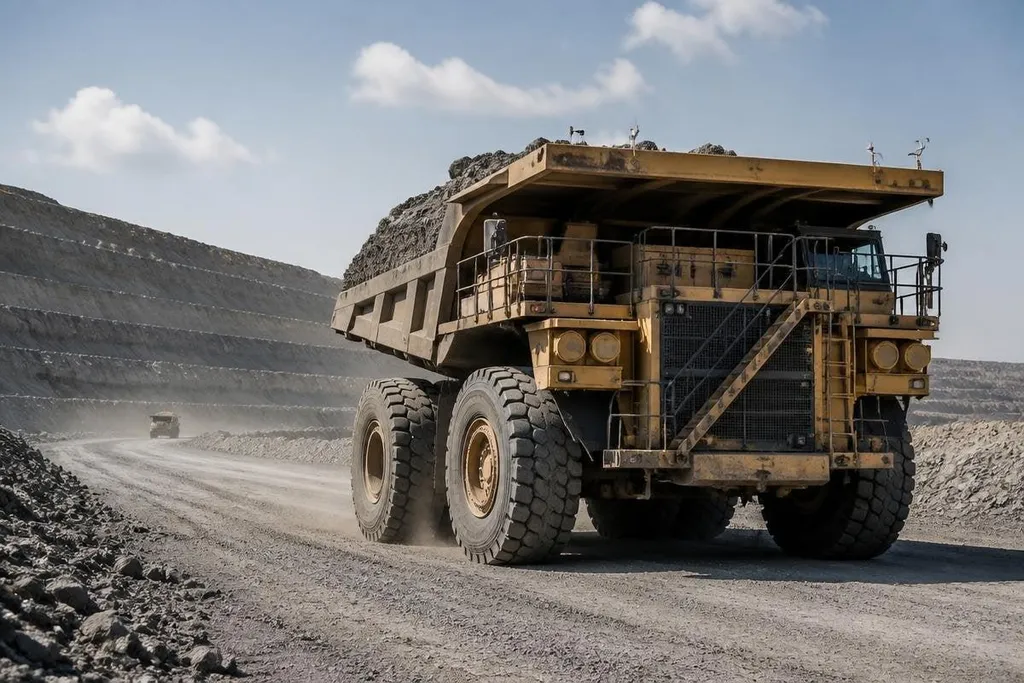
A self-driving mining truck can weigh hundreds of tonnes, yet its driving decisions come from a map, sensors, and a control computer. The system plans a route along haul roads, watches for hazards, and sets steering, braking, and speed without a driver in the cab.
- Sensors build a view: GNSS, LiDAR, radar, cameras, and motion sensors track the truck and its surroundings.
- Software follows a route: A dispatch system assigns the load, dump point, and travel path.
- Safety rules limit movement: Geofences, exclusion zones, and automatic stops keep the truck inside approved areas.
The truck starts with a digital map
Mining sites give the truck a mapped work area. The map can include haul roads, loading points, dump locations, berms, intersections, speed limits, and restricted zones. Satellite positioning from a global navigation satellite system, or GNSS, tells the truck where it is on that map.
GNSS alone cannot handle the job. Dust, rock walls, slopes, and blocked satellite signals can make the position less certain, so the truck compares satellite data with wheel-speed sensors and an inertial measurement unit. The inertial unit measures changes in motion, including turning and acceleration.
That combined position estimate lets the control system follow a planned path. If the truck drifts from the route, the steering system corrects its line while the speed controller sets braking and acceleration.
Sensors watch the road
The truck checks the space around it with several sensor types because each one fails in a different way. LiDAR measures distance with laser pulses, radar detects objects through dust better than cameras, and cameras show road users, signs, and equipment.
The computer compares fresh sensor data with the map. A rock that was absent from the map can become a temporary obstacle, while a parked service vehicle can be marked as a moving risk until the system confirms its position.
The truck also watches its own condition. Wheel speed, steering angle, brake pressure, engine data, and payload information let the system decide whether it can continue. A fault can trigger a controlled stop rather than a new route.
Dispatch decides what happens next
Self-driving haulage is usually part of a larger mine control system. A dispatch platform assigns a truck to a loader, sends it to a dump point, and records its status while other trucks share the same road network.
That link matters because a truck can follow its path correctly and still cause a problem if another vehicle blocks the loading area. The dispatch system orders the movements, while the truck handles local driving and obstacle checks.
These control layers need reporting that names the truck, sensors, dispatch software, and site conditions. Robot24.com mining robotics coverage can put those details beside the task and test result, so you can see where automated driving ends and human supervision begins.
A remote operator may supervise several trucks from a control room. They can review alarms, speak with workers at the site, or take control when the system reaches a situation outside its approved rules. Remote control does not remove the need for trained staff; it moves part of the work away from the cab.
Safety sits outside the driving code
Mining sites use physical and software controls around the truck. Geofences define where it may travel. Exclusion zones block entry to areas where people or maintenance vehicles are working. Emergency-stop systems can bring the truck to a halt when a serious fault or human command requires it.
The system must also handle mixed traffic. Crewed trucks, water carts, light vehicles, loaders, and maintenance teams may share the same site.
Radios, warning lights, access rules, and site procedures work with the truck's sensors, since no sensor can predict every human action. Dust, heavy rain, poor road edges, loose rock, and sensor damage remain hard cases. A mine may restrict operation during certain conditions or require a person to check the area before the truck moves again.
What to check before buying the system
A mine manager comparing autonomous haulage systems should ask:
- Map upkeep: Who updates the map after a road, berm, or dump point changes?
- Mixed traffic: How does the truck behave near crewed vehicles and people on foot?
- Sensor faults: Which faults cause a stop, and which allow the truck to continue?
- Remote control: How many trucks can one operator supervise during a normal shift?
- Recovery work: What happens after a truck stops with a full load away from the main road?
- Proof in operation: Which mine has run the system in conditions similar to yours?
The last point matters most. A clean demonstration on a mapped road says little about recovery work, changing routes, service vehicles, and poor visibility.
I'd judge a system by its stop behavior and recovery process before its driving video. A truck that follows a route well is useful; a truck that stops safely, reports the fault, and returns to work without guesswork is ready for serious mine work.